
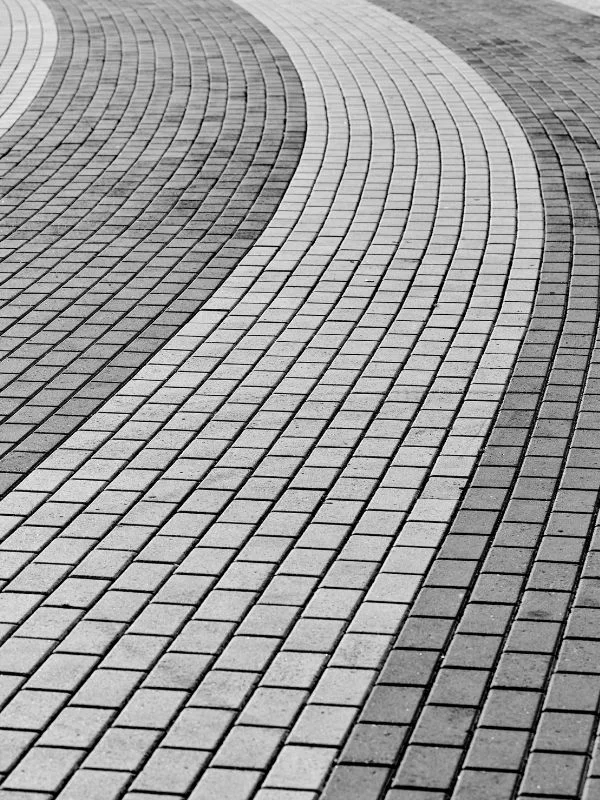
A garden path is a daily route as well as a design feature. It may carry bins, a mower or visitors to the back door, so its layout deserves more attention than a line drawn between two points. Planning paths alongside paving, fencing and drainage helps Glasgow homeowners avoid awkward junctions.
In this article
Follow the real journeys
Mark where people already walk and what they carry. A direct route to a gate may be more useful than a decorative curve if it is used every day. Think about opening gates and getting equipment around corners. Describe these tasks in your enquiry so the width and layout can be discussed against practical needs.
Paving in GlasgowCoordinate the edges
Paths often meet several surfaces: a patio, lawn, gravel strip or gate threshold. Agree where each finish starts and ends before work begins. An edge that looks tidy on a sketch also needs to be manageable during lawn care. Consider the relationship with existing fences and posts so future repairs do not automatically disturb the path.
Fencing in GlasgowObserve wet-weather conditions
Watch the intended route after rain. A low strip beside the house may need more than new paving to make it usable. Surface falls and suitable water management should be considered as part of preparation. Do not deliberately send runoff into a neighbouring property or assume an existing drain is a suitable destination without assessment.
Drainage in GlasgowChoose a coherent finish
Using the same or a complementary material as the patio can make the route feel integrated. Ask which paving products suit the proposed path and ground conditions. Include photographs of both ends of the route when requesting a quote, because the junctions often reveal details that a close-up of the middle cannot show.
Paving in GlasgowDiscuss your garden project
MGL serves Glasgow and surrounding towns within 30 miles. Send your postcode, approximate dimensions and the work you have in mind for a free quote.
Request a quote